
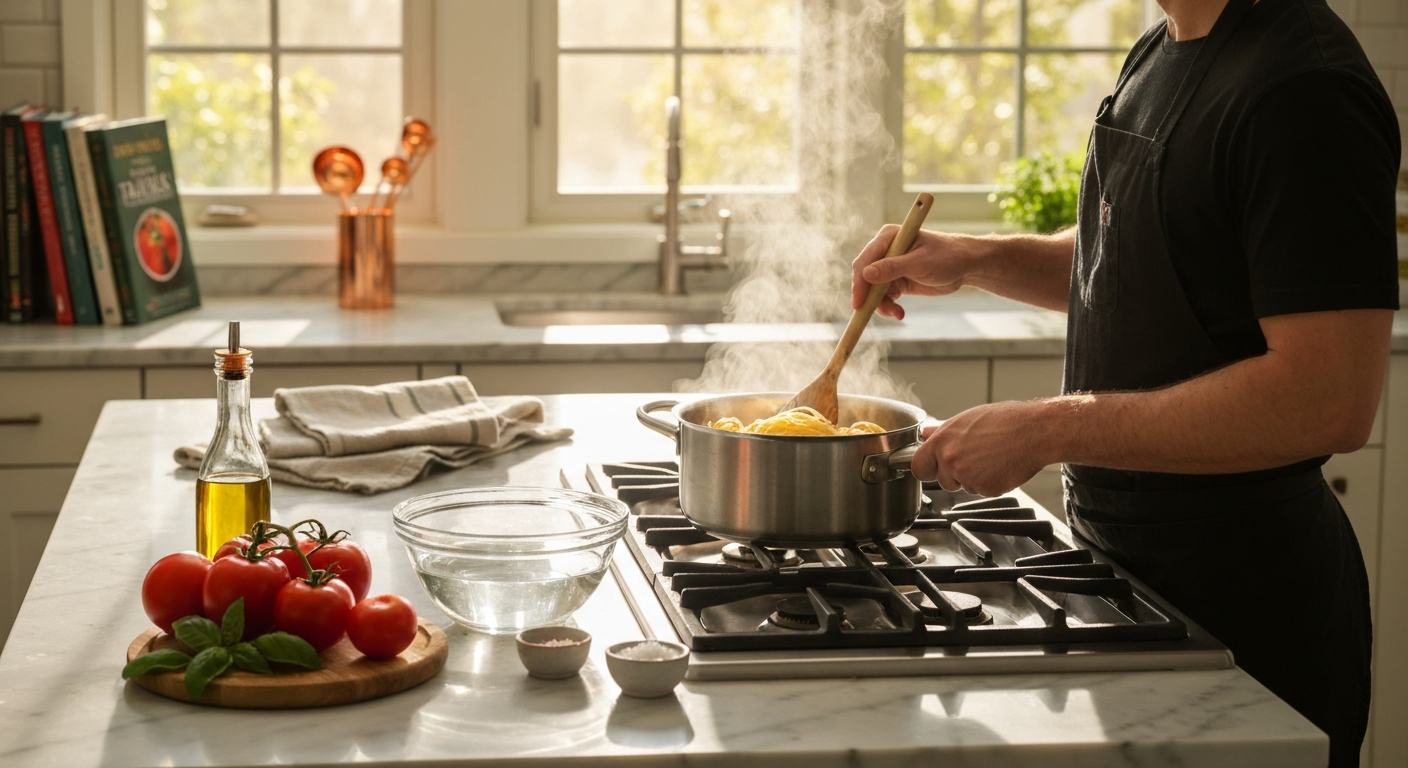
How to Cook Pasta
Introduction
Learning how to cook pasta correctly transforms a simple ingredient into a restaurant-quality dish. Many home cooks struggle with timing, texture, and water management when preparing pasta. This guide reveals professional techniques that guarantee perfectly al dente results every time. You’ll discover the secrets that Italian chefs use daily. Understanding the science behind cooking pasta elevates your everyday meals. Whether you’re preparing spaghetti, penne, or rigatoni, these proven methods work consistently.
Key Takeaways
- Use plenty of water: 4 quarts per pound of pasta ensures even cooking
- Salt water generously: Add 1-2 tablespoons of kosher salt for proper seasoning
- Test early: Begin tasting pasta 1-2 minutes before package directions suggest
- Reserve pasta water: Save 1 cup of starchy liquid for sauce preparation
- Avoid rinsing: Drain pasta immediately without rinsing to preserve starch
- Finish in sauce: Combine hot pasta with sauce for final flavor melding
The Complete Guide to Cooking Perfect Pasta
Selecting Quality Pasta
Not all pasta performs equally when cooking. Dried pasta containing durum semolina wheat cooks more consistently than softer varieties. Check ingredient lists for “100% durum wheat” or “semolina.” Bronze-cut pasta (traditionally rough) grabs sauce better than polished varieties. Fresh pasta requires different timing entirely—typically 2-4 minutes versus 8-12 minutes for dried. American pasta brands like Barilla and Banza now offer whole grain and protein-enhanced options. Premium Italian imports deliver superior texture. Your pasta selection directly impacts final results, so invest in quality sources.
The Water Foundation
Water quantity matters more than most cooks realize. Professional kitchens use a 4-to-1 water-to-pasta ratio by weight. For one pound of dried pasta, use exactly 4 quarts of water in a large pot. This generous amount prevents starch accumulation and ensures even heat distribution. Bring water to a rolling boil before adding pasta—never add cold water. The vigorous boil keeps pasta strands separated during cooking. Some chefs add a small splash of olive oil, though this remains debated among professionals. Allow water to return to boiling within 2 minutes after adding pasta. This resumption indicates proper cooking has begun successfully.
Seasoning: The Salt Strategy
| Cooking Stage | Salt Amount | Ratio |
|---|---|---|
| Initial water | 1-2 tbsp kosher salt | Per 4 quarts |
| Pasta water | Taste adjustment | Mid-cooking |
| Final finish | Adjust with sauce | Optional |
Salt transforms bland pasta into seasoned perfection. Add kosher salt once water reaches a full rolling boil. Wait 30-60 seconds before adding pasta. The timing allows salt to fully dissolve. Water should taste pleasantly salty—similar to seawater. This seasoning penetrates pasta throughout cooking, unlike surface-applied salt. Furthermore, salted water raises the boiling point slightly, improving texture development. Undersalted pasta remains disappointingly bland regardless of sauce quality. Professional chefs never skip this crucial step.
Cooking Times and Testing
Package directions provide starting points, not gospel. Begin testing pasta 1-2 minutes before suggested cooking times. Remove a single strand and break it in half—the center should show no white flour core. Al dente pasta has slight resistance when bitten but isn’t crunchy. Repeat testing every 30-60 seconds after initial sampling. Cooking times vary based on pasta shape, thickness, and altitude. Thin angel hair cooks in 6-8 minutes, while thick rigatoni needs 12-15 minutes. Fresh pasta cooks in just 2-3 minutes. Experienced cooks develop intuition through practice and observation.
The Critical Reserve Liquid Step
Experienced cooks always reserve pasta water before draining. Scoop out 1 cup of starchy cooking liquid into a separate container. This liquid becomes invaluable when finishing pasta with sauce. The starch creates silky emulsification between pasta and sauce components. Add reserved water gradually—start with 2 tablespoons—to thin tight sauces. This professional technique, called “mantecatura” in Italian cooking, creates cohesive, restaurant-quality dishes. Most home cooks skip this step, resulting in separated, incomplete-tasting meals. This single addition dramatically improves texture and mouthfeel.
Draining and Combining
Drain pasta immediately through a colander when al dente texture reaches perfection. Never rinse with cold water—this removes beneficial surface starch. Hot pasta goes directly into sauce pans or mixing bowls. The heat maintains optimal cooking, allowing final flavor integration. Toss pasta with sauce for 30-60 seconds over medium heat. This period allows sauce to coat evenly and flavors to meld completely. Add reserved pasta water if the combination seems dry. Professional plating happens within 90 seconds of sauce combination. Speed ensures pasta reaches plates at ideal temperature.
Frequently Asked Questions
Should I rinse pasta after cooking?
No. Rinsing removes surface starch that helps sauce adhere. Drain thoroughly in a colander instead.
Why does my pasta stick together?
Using insufficient water or not stirring immediately after adding pasta causes sticking. Stir well for the first minute.
Can I cook pasta ahead and reheat it?
Yes, but quality diminishes. Cook just before serving when possible. Store finished pasta covered in the refrigerator.
What’s the best pasta water ratio?
Use 4 quarts of water per pound of dried pasta. This standard ensures consistent results.
Should I add oil to pasta water?
This remains debated. Oil allegedly prevents sticking, though proper technique makes this unnecessary.
How do I know when pasta is al dente?
Taste frequently. Al dente pasta shows no white core when broken and has slight firmness when bitten.
Conclusion
Mastering how to cook pasta involves understanding water ratios, proper seasoning, accurate timing, and professional finishing techniques. These fundamental principles transform cooking from guesswork into repeatable success. Quality pasta, generous water, proper salting, and strategic reserve-liquid usage create consistently excellent results. Start practicing these methods immediately—your next pasta dish will noticeably improve. Remember that cooking excellence develops through repetition and attention to detail. Your family and guests will detect the remarkable difference. These simple adjustments separate mediocre pasta from genuinely exceptional meals that satisfy.
References
- National Pasta Association provides cooking guidelines and pasta nutrition standards for American consumers.
- International Pasta Organization documents traditional Italian cooking methods and modern developments in pasta preparation.
- Cook’s Illustrated Magazine shares scientific testing results about pasta cooking ratios and optimal techniques.
- America’s Test Kitchen verifies pasta cooking methods through rigorous experimentation and consumer testing.
- The Spruce Eats delivers contemporary pasta cooking advice for home kitchen applications.