
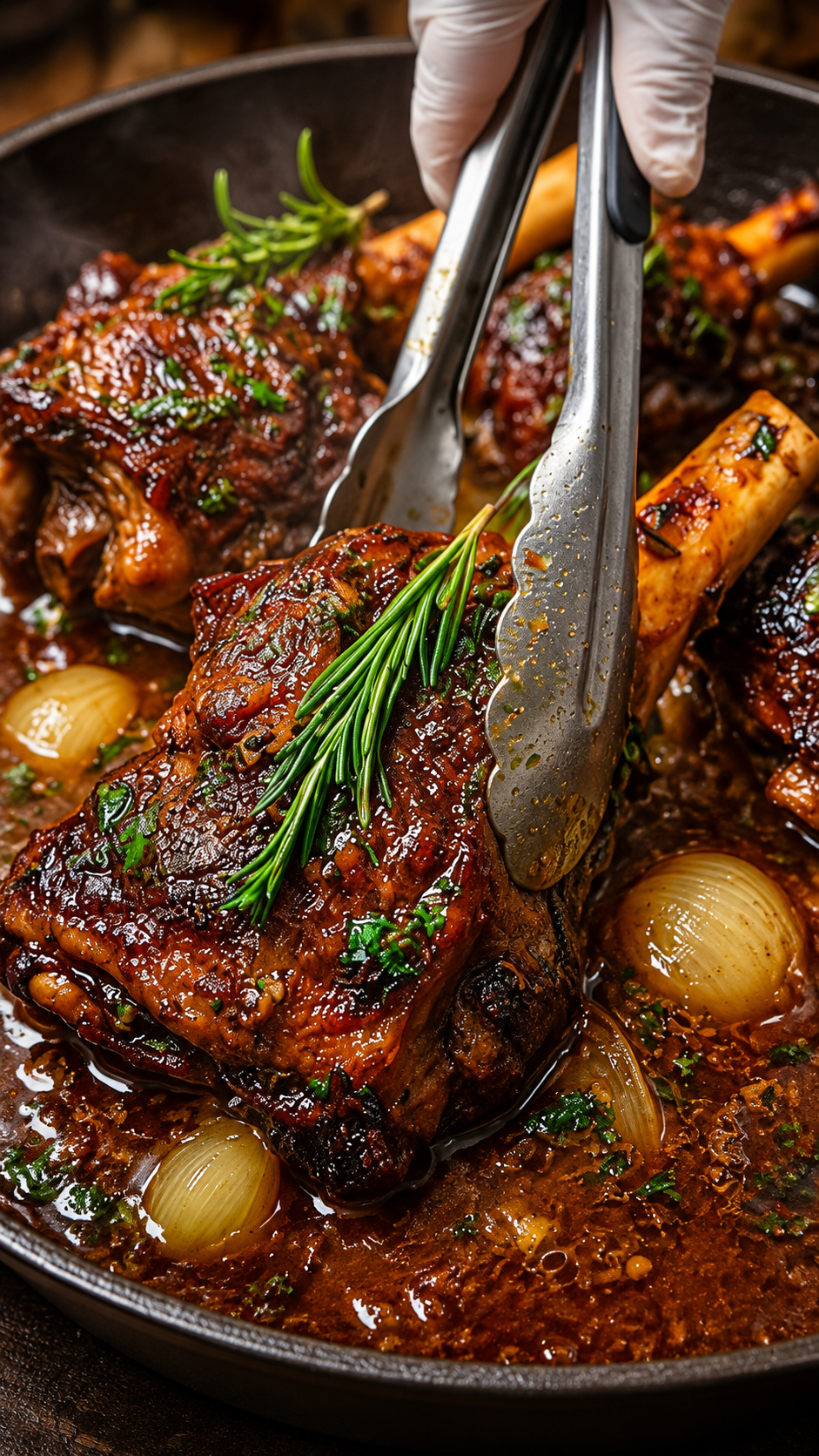
Rich, tender, fall-off-the-bone beef short ribs in a savory homemade gravy
These slow-braised beef short ribs are the perfect comfort food for a family dinner, a special occasion, or a cozy weekend meal. The beef is seared until deeply golden brown, then slowly cooked with garlic, onions, fresh rosemary, beef broth, and aromatic seasonings until incredibly tender.
As the ribs cook, their natural juices combine with the broth and seasonings to create a rich, silky brown sauce that coats every piece of meat. The caramelized onions become sweet and tender, while the rosemary and garlic add a wonderful aroma.
Prep Time: 25 minutes
Cooking Time: 3–3½ hours
Total Time: Approximately 4 hours
Servings: 4–6 people
Cooking Method: Oven braising
Difficulty: Moderate
Ingredients
For the Beef Short Ribs
- 3–4 lb (1.4–1.8 kg) bone-in beef short ribs
- 2 tablespoons olive oil
- 2 tablespoons unsalted butter
- 1½ teaspoons salt, or to taste
- 1 teaspoon freshly ground black pepper
- 1 teaspoon smoked paprika
- 1 teaspoon garlic powder
- 1 teaspoon onion powder
- 1 teaspoon dried thyme
- 1 tablespoon all-purpose flour, optional, for extra browning and a slightly thicker sauce
For the Garlic and Onion Sauce
- 2 large yellow onions, sliced into thick wedges
- 8–10 garlic cloves, peeled
- 2 medium carrots, cut into large pieces
- 2 tablespoons tomato paste
- 2 cups (480 ml) beef broth
- 1 cup (240 ml) dry red wine, optional; replace with additional beef broth if preferred
- 1 tablespoon Worcestershire sauce
- 1 teaspoon Dijon mustard, optional
- 2 fresh rosemary sprigs
- 4–5 fresh thyme sprigs
- 2 bay leaves
- 1 teaspoon brown sugar, optional
- 1 tablespoon balsamic vinegar, optional
- 1 tablespoon cornstarch mixed with 2 tablespoons cold water, optional for thickening
For Garnishing
- 2 fresh rosemary sprigs
- 1 tablespoon freshly chopped parsley
- Freshly ground black pepper, to taste
- A little extra sauce for spooning over the ribs
Instructions
Step 1: Prepare the Beef
Remove the beef short ribs from the refrigerator approximately 20–30 minutes before cooking.
Pat the ribs dry with paper towels. This step is important because removing excess moisture helps the meat develop a beautiful brown crust when seared.
In a small bowl, combine the salt, black pepper, smoked paprika, garlic powder, onion powder, and dried thyme.
Season all sides of the ribs generously with the spice mixture. If you want a slightly thicker gravy, lightly dust the ribs with the optional tablespoon of flour.
Step 2: Sear the Short Ribs
Preheat your oven to 325°F (160°C).
Heat the olive oil in a large, heavy oven-safe Dutch oven or deep roasting pan over medium-high heat.
Working in batches, place the ribs in the hot pan without overcrowding them. Sear each side for approximately 3–5 minutes, until a deep golden-brown crust forms.
Turn the ribs carefully with kitchen tongs to brown all sides, including the edges.
Transfer the browned ribs to a plate and set aside.
Do not rush this step. The browned surface adds depth of flavor and gives the finished gravy its rich, appetizing color.
Step 3: Cook the Onions, Carrots, and Garlic
Reduce the heat to medium and add the butter to the same pan.
Add the onion wedges and carrot pieces. Cook for 5–7 minutes, stirring occasionally, until the onions begin to soften and develop golden edges.
Add the peeled garlic cloves and cook for another 1–2 minutes.
Stir in the tomato paste and cook for approximately 2 minutes. The tomato paste should darken slightly and become fragrant.
Scrape the bottom of the pan with a wooden spoon to loosen the flavorful browned bits left behind by the beef.
Step 4: Prepare the Rich Braising Liquid
If using red wine, carefully pour it into the pan and let it simmer for 3–5 minutes to reduce slightly.
If you prefer not to use wine, simply use additional beef broth.
Add the beef broth, Worcestershire sauce, Dijon mustard, and optional brown sugar and balsamic vinegar.
Stir well until the tomato paste is incorporated into the liquid.
Add the rosemary sprigs, thyme sprigs, and bay leaves.
Bring the mixture to a gentle simmer. Taste the liquid and adjust the seasoning if necessary, remembering that it will become more concentrated as it cooks.
Step 5: Return the Beef to the Pan
Carefully arrange the browned short ribs in the pan, placing them among the onions and carrots.
Pour some of the braising liquid over the ribs with a large spoon.
The liquid should reach approximately halfway to two-thirds of the way up the ribs. The meat does not need to be completely submerged.
Cover the pan tightly with its lid. If your pan does not have a lid, use a secure layer of oven-safe aluminum foil.
Step 6: Slowly Braise the Beef
Transfer the covered pan to the preheated oven.
Cook for approximately 2½–3½ hours, depending on the size and thickness of the ribs.
After about 2 hours, carefully check the liquid level and turn or baste the ribs if needed.
The beef is ready when a fork slides into the meat easily and the meat is very tender. If it still feels firm, continue cooking and check every 20–30 minutes.
Slow cooking allows the connective tissue to break down, creating exceptionally tender beef and a naturally rich sauce.
Step 7: Develop the Glossy Brown Gravy
When the beef is tender, carefully remove the pan from the oven.
Transfer the short ribs to a warm plate and cover loosely with foil.
Remove the rosemary stems, thyme stems, and bay leaves from the sauce.
Place the pan over medium heat on the stovetop, if suitable for your cookware. Let the sauce simmer uncovered for 5–10 minutes to concentrate the flavor.
For a smoother gravy, strain the liquid and return it to the pan. For a rustic presentation like the picture, leave the softened onions and garlic in the sauce.
If you prefer a thicker sauce, stir together 1 tablespoon of cornstarch and 2 tablespoons of cold water. Add the mixture gradually to the simmering gravy while stirring.
Cook for 1–2 minutes, until the sauce thickens. Avoid adding too much thickener at once.
Taste the gravy and adjust the salt and pepper. A small splash of balsamic vinegar can brighten the flavor if the sauce tastes too heavy.
Step 8: Coat the Ribs in the Sauce
Return the beef short ribs to the pan.
Using a large spoon, gently baste each piece with the glossy brown gravy.
Let the ribs simmer gently in the sauce for 2–3 minutes, taking care not to break apart the tender meat.
Spoon the softened onions and garlic around the beef. Make sure each rib is generously coated with the rich sauce.
Step 9: Garnish and Serve
Arrange the ribs in the pan with the caramelized onions and garlic cloves.
Place fresh rosemary sprigs over the top and sprinkle with freshly chopped parsley and a little black pepper.
Spoon extra gravy over the meat just before serving.
Serve immediately while hot, with the sauce pooled around the ribs.
Serving Suggestions
These beef short ribs pair beautifully with:
- Creamy mashed potatoes that soak up the rich gravy.
- Buttered egg noodles or homemade pasta.
- Steamed rice for an easy family dinner.
- Roasted potatoes with garlic and rosemary.
- Green beans sautéed with butter and garlic.
- Roasted carrots, broccoli, or seasonal vegetables.
- Crusty bread for soaking up every last drop of sauce.
Tips for the Best Results
Choose well-marbled beef. Bone-in short ribs with visible marbling generally produce a richer, more flavorful result.
Dry the meat before searing. Moisture on the surface prevents proper browning.
Avoid overcrowding the pan. Brown the ribs in batches so they develop a deep crust.
Cook low and slow. Gentle braising is the secret to tender, succulent beef.
Keep the pan covered. A tight lid helps retain moisture throughout the cooking process.
Check tenderness rather than relying only on the clock. Some ribs require more time than others.
Make the gravy ahead. The flavor often becomes even better after resting overnight in the refrigerator.
Storage and Reheating
Allow the cooked beef and sauce to cool slightly before transferring them to airtight containers.
- Refrigerator: Store for up to 3–4 days.
- Freezer: Freeze in an airtight, freezer-safe container for approximately 2–3 months for best quality.
- Reheating: Warm gently in a covered saucepan over low heat, adding a little beef broth if the sauce has thickened too much. Alternatively, reheat in a covered oven-safe dish at 300°F (150°C) until thoroughly heated.
Refrigerate leftovers within 2 hours of cooking, and reheat them to 165°F (74°C).
Frequently Asked Questions
Can I make this recipe without red wine?
Yes. Replace the wine with the same amount of beef broth. A small splash of balsamic vinegar can add extra depth.
Can I cook the ribs in a slow cooker?
Yes. Sear the ribs first, prepare the onions and sauce, and transfer everything to a slow cooker. Cook on LOW for approximately 7–8 hours or until the beef is fork-tender.
Can I prepare this recipe the day before?
Absolutely. Refrigerate the cooked ribs in their sauce. The next day, remove any excess solidified fat from the surface and gently reheat the beef in the sauce.
Why are my short ribs still tough?
They may need more cooking time. Continue braising until the connective tissue softens and the meat becomes tender.
How do I make the sauce extra rich?
Sear the meat properly, caramelize the onions, reduce the braising liquid, and finish the sauce with a small knob of butter if desired.
Can I use boneless beef short ribs?
Yes. Boneless ribs work well, but cooking time may vary depending on their size and thickness.
Final Result
You will have beautifully browned, tender beef short ribs surrounded by sweet caramelized onions, soft garlic cloves, fresh rosemary, and a rich, glossy brown gravy.
This is a hearty, restaurant-style dish that looks impressive on the table and tastes even better when served with mashed potatoes, rice, or warm crusty bread.
Enjoy your homemade slow-braised beef short ribs!